
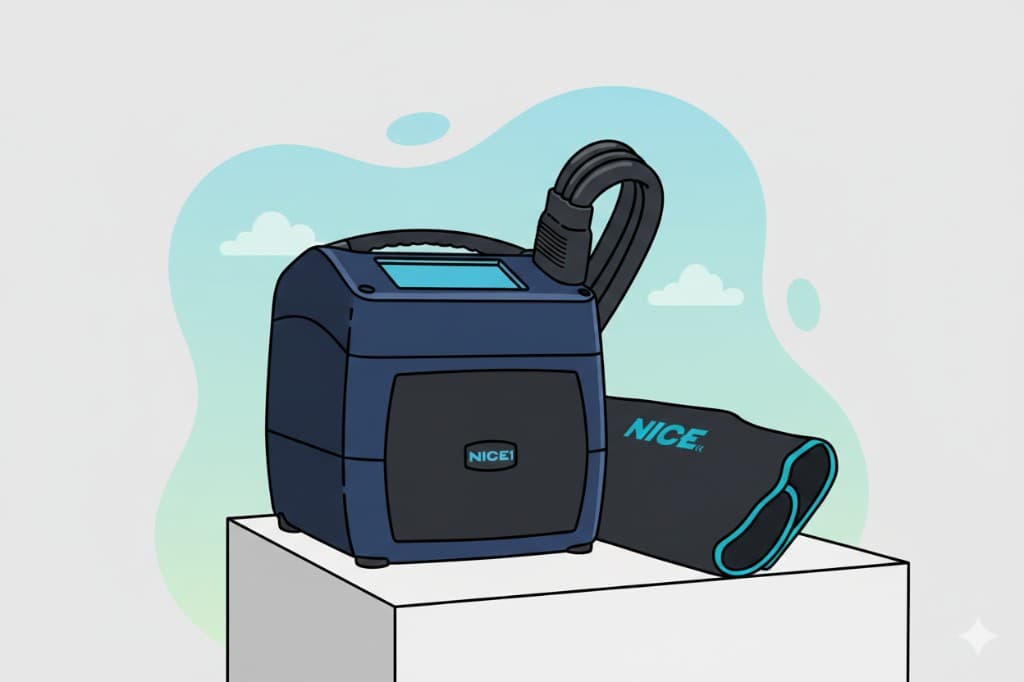
How Does This Thing Actually Work? — How the NICE1 Cold & Compression Therapy Machine Works
Published · by Recovery Kit Team
Electricity goes in and cold water comes out — but how? We explain how the NICE machine works in plain English, from Peltier tiles to precision cold therapy.
It can feel a bit like magic. We often compare it to a fridge, or an air conditioning unit.
You pour in room-temperature water. You plug it in and turn it on. And somehow, using some NICE magic, you've got controlled, ice-cold compression therapy.
So let's break it down — in plain English. (No engineering degree required).
The NICE Machine Works Like a Tiny Cooling Engine
At its core, the NICE machine is basically a compact thermal engine that uses some smart physics called The Peltier Effect.
Instead of using ice, frozen bottles, or noisy refrigeration compressors, it uses smart solid-state cooling technology to remove heat from water. So it doesn't “create cold” — it removes any warmth from the water. By removing the warmth from the water, the tank gets very cold, and that cold water is what circulates through the wrap.
The NICE machine uses three key components:
- Peltier tiles
- A water block
- A thermal engine
Let's break these down.
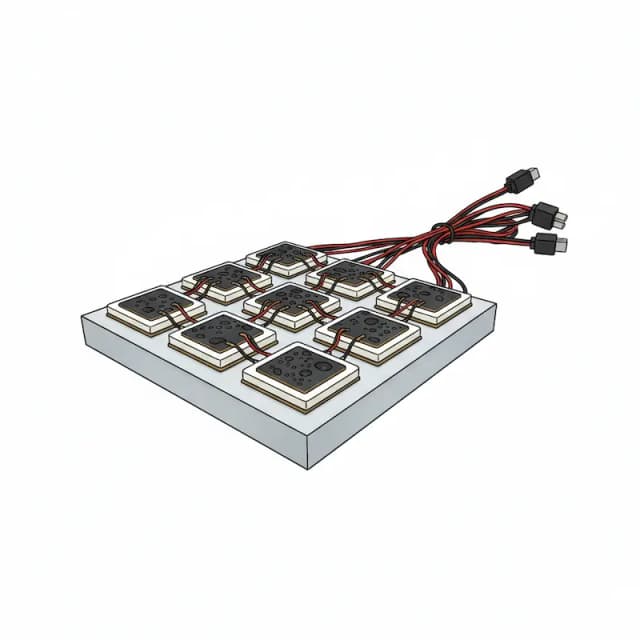
Peltier Tiles (The Magic Cooling Plates)
Peltier tiles are small electronic plates. When electricity passes through them, one side gets very hot while the other side gets very cold.
There are no moving parts, gas or compressor — just an electrical current. The NICE machine is designed to harness the cold side efficiently, and safely remove heat from the hot side.
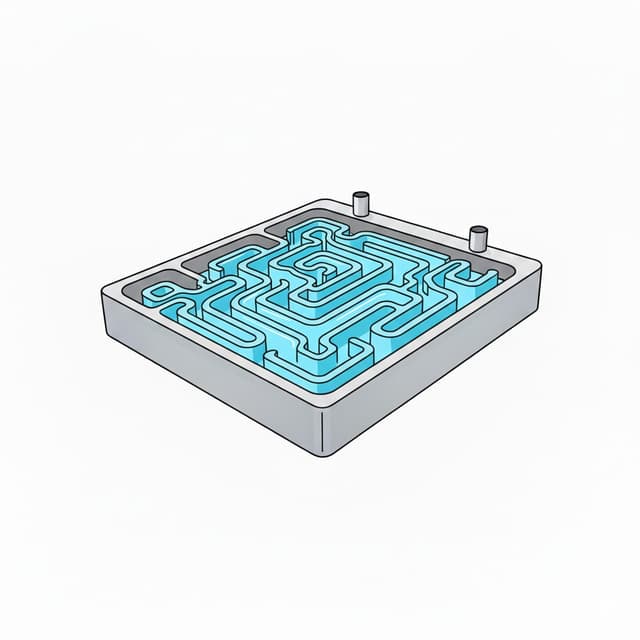
The Water Block (Where Cooling Happens)
This part is exactly what it says on the tin — a metal block with channels that allows water to flow through it. The water block sits directly against the cold side of the Peltier tiles, so that as the tiles get cold, they absorb all of the heat energy flowing through the block in the water.
That causes the temperature of the water to drop, and it is continuous, controlled and consistent. This means there is no melting ice, no spikes or increases in temperature, and it doesn't ‘use up’ the water — so it requires no refills.
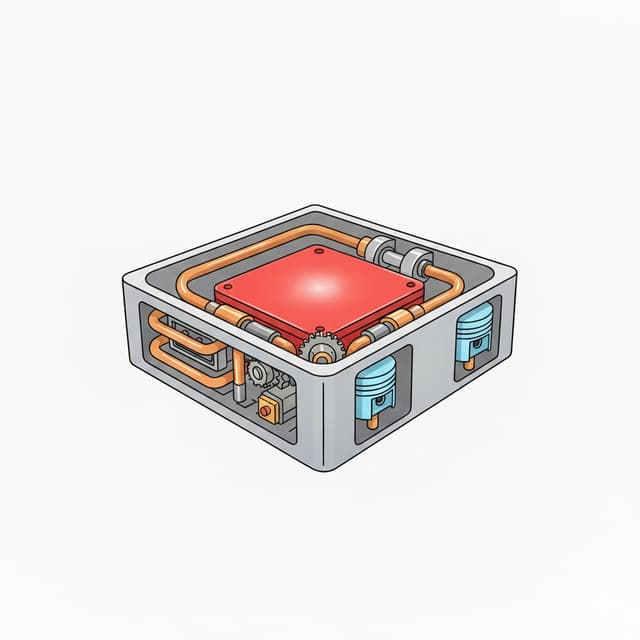
The Thermal Engine (The Part That Removes Heat)
This is probably the most important part of the system.
If one side of the Peltier tiles gets cold, the other side has to get hot — and that heat has to go somewhere. The NICE machine uses a carefully designed thermal engine system using passive heat exchangers called heat sinks and optimising airflow to safely remove that excess heat from the hot side.
You can think of it like a car radiator — but much smaller and much quieter.
How Does This Compare to Alternative Systems?
Traditional cold therapy systems rely on you putting in ice, frozen coolants, water pouches, or refrigerant compressors. The NICE machine uses solid-state thermoelectric cooling instead.
That means:
- No ice
- No freezing
- No bulky compressor
- No temperature drop-off
- Precise control
It just plugs in and works. Like magic.
This has real benefits when it comes to your recovery. With other machines, the ice melts, the temperature rises and the compression systems fluctuate. The NICE machine maintains controlled, steady cooling, and without ice it is more portable, more practical, and completely eliminates freezer logistics.
SO, TO RECAP:
- Electricity powers special cooling tiles
- One side gets cold
- Water flows past the cold surface
- Heat is pulled out of the water
- Cold water circulates through the wrap
- The system removes excess heat safely
Simple. NICE.
Ready to recover?