
Don't Suffer in Pain — Non-Pharmacological Pain Management with Cold & Compression Therapy
Published · by Recovery Kit Team
Preparing for surgery? Discover effective non-pharmacological pain management options including cold and compression therapy to reduce swelling, inflammation and reliance on painkillers.
At Recovery Kit, we believe in pragmatic, anecdotal and experience led treatment, backed by both research and evidence based methodology.
When you are preparing to have surgery, it is important to have a good understanding of what your recovery journey will look like. For most people, you will experience discomfort somewhere on a scale of annoyance, to painful. Anticipating your recovery ahead of time, and planning how you will manage that is important.
Exploring Non-Pharmacological Pain Management Options
Pain management is an essential aspect of recovery from injury or surgery. Traditionally, individuals have relied on pharmaceutical solutions to alleviate pain and inflammation. However, the growing trend toward non-pharmacological pain management offers alternative methods that can provide effective relief without the potential side effects associated with medications.
Among these methods, cold therapy (cryotherapy) and compression therapy stand out as highly effective, natural treatments for managing pain, inflammation, and swelling. Integrating these therapies into your routine can significantly enhance your recovery from injuries and surgeries, offering both short-term and long-term benefits. These non-pharmacological methods have significant popularity in sports medicine, rehabilitation settings, and even for general wellness, as they address the root causes of pain in a natural, efficient way.
The Gold Standard therapies like Cold and Compression are not just for athletes — they are an essential tool for anyone recovering from surgery, managing a chronic condition, or looking to avoid over-reliance on painkillers.
Understanding Non-Pharmacological Pain Management
Non-pharmacological pain management refers to pain relief methods that do not involve medications. These approaches aim to address the root causes of pain and inflammation through natural means, reducing the need for pharmaceutical interventions. Many people are increasingly seeking non-pharmaceutical treatments due to concerns about medication side effects, addiction, and long-term dependence. Non-pharmacological methods are not only safe but can be used in conjunction with other treatments, including medication, to optimise recovery.
Some common forms of non-pharmacological pain management include:
- Cold Therapy: Utilising cold to numb the area and reduce inflammation.
- Compression Therapy: Applying controlled pressure to promote fluid drainage and enhance circulation.
- Physical Therapy: Strengthening muscles and improving mobility to reduce pain.
- Heat Therapy: Using heat to relax muscles and improve blood flow.
Cold and compression therapies have proven highly effective for conditions like acute injury, post-surgery recovery, chronic pain, and muscle soreness. They provide immediate relief and accelerate the healing process by addressing the underlying physiological issues that cause pain and inflammation. By reducing swelling and improving blood flow, these therapies can facilitate a more efficient healing process, helping the body repair damaged tissues faster and with less discomfort.
The Role of Cold Therapy in Pain Management
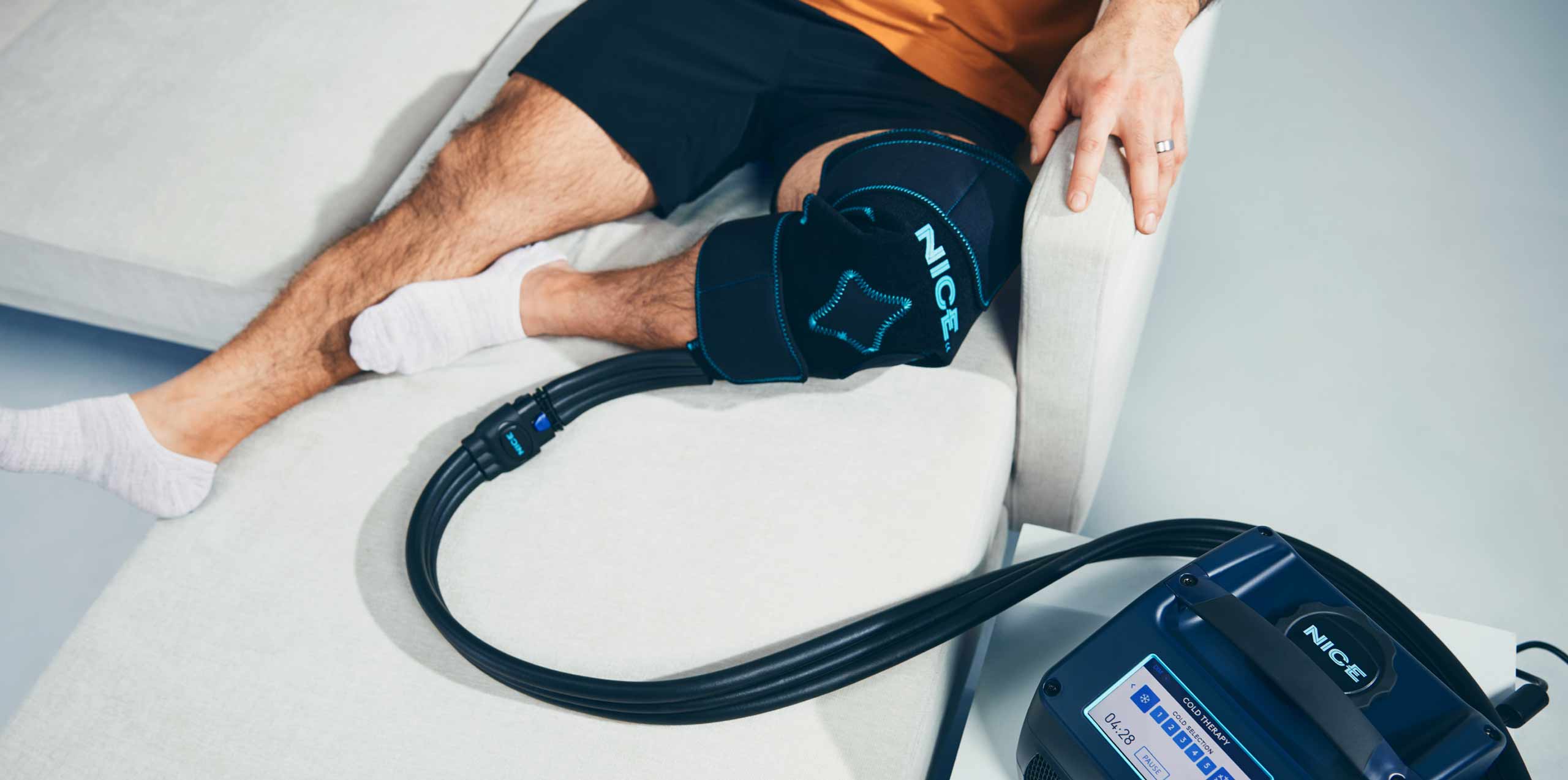
Cold therapy, or cryotherapy, involves the application of cold to the body, either through ice packs, cold gels, or specialised machines like the NICE1 Cold Therapy and Compression System. The primary mechanism of cold therapy is vasoconstriction, which refers to the narrowing of blood vessels upon exposure to cold. This slows down blood flow to the affected area, reducing swelling and inflammation while simultaneously numbing the nerves to alleviate pain.
Key benefits of cold therapy include:
- Reduction in Inflammation: By narrowing blood vessels, cold therapy reduces the amount of blood flowing to the injured area, preventing excessive swelling and tissue damage, or bringing down existing swelling and inflammation so that you can start to mobilise.
- Pain Relief: Cold numbs the nerves in the affected area, providing immediate pain relief, especially useful in the early stages of injury or post-surgery.
- Prevention of Further Tissue Damage: Cold therapy helps minimise the risk of cellular damage caused by prolonged swelling and inflammation.
Studies have consistently shown that cold therapy can help reduce inflammation and swelling in the first 24–72 hours following an injury. A 2020 study published in the Saudi Journal of Sports Medicine found that cryotherapy applied immediately after injury can significantly reduce swelling and speed up recovery. This makes cold therapy an essential tool for both acute injuries and post-surgery recovery. It has been found that post-surgery patients who use cold therapy experience less discomfort and can often return to their normal activities sooner than those who do not.
The NICE1 Cold Therapy and Compression System
The NICE1 Cold Therapy and Compression System is an advanced device designed to deliver both cold therapy and intermittent compression in a single treatment. This combination helps athletes, patients, and individuals recovering from surgery to effectively manage pain, reduce swelling, and accelerate healing.
Key features of the NICE1 include:
- Cold Therapy: Provides precise temperature control to reduce pain and inflammation.
- Compression Therapy: Offers adjustable levels of compression to promote circulation and lymphatic drainage.
- Portability: The compact, lightweight design makes it easy to use at home, at the gym, or on the go.
- Customisable Treatment: Adjust the cold and compression settings based on your personal recovery needs.
Whether you're recovering from an injury, surgery, or managing chronic pain, the NICE1 provides the comprehensive treatment you need to enhance recovery and improve your quality of life. Its combination of cold and compression therapy ensures a holistic approach to pain relief and recovery, making it an essential tool for those looking to heal more efficiently and effectively.
Ready to recover?
References
- Kwiecien, S. Y., & McHugh, M. P. (2021). The cold truth: the role of cryotherapy in the treatment of injury and recovery from exercise. European Journal of Applied Physiology, 121(6), 1463–1476. https://doi.org/10.1007/s00421-021-04683-8
- McNeal, J. R., & Mikesky, A. E. (2021). Putting the squeeze on compression garments: Current evidence and practical applications. Sports Medicine, 51(4), 659–671. https://doi.org/10.1007/s40279-021-01499-9
- Khan, M., Phillips, S., Mathew, P.K., Venkateswaran, V., Haverstock, J., Dagher, D., Yardley, D., Dick, D. and Bhandari, M., 2025, November. CRYOCOMPRESSION RESULTS IN A SIGNIFICANT DECREASE IN OPIOID CONSUMPTION FOLLOWING SHOULDER SURGERY: A MULTICENTRE RANDOMIZED CONTROLLED TRIAL. In Orthopaedic Proceedings(Vol. 107, No. SUPP_13, pp. 128–128). Bone & Joint.
- Morsi, E., 2002. Continuous-flow cold therapy after total knee arthroplasty. The Journal of Arthroplasty, 17(6), pp. 718–722.
- Yaman Aktaş, Y., Durgun, H. and Durhan, R., 2021. Cold therapy and the effect on pain and physiological parameters in patients recovering from spine surgery: a randomized prospective study. Complementary Medicine Research, 28(1), pp. 31–39.
- Apfelbaum, J.L., Chen, C., Mehta, S.S. and Gan, T.J., 2003. Postoperative pain experience: results from a national survey suggest postoperative pain continues to be undermanaged. Anesthesia & Analgesia, 97(2), pp. 534–540.