
How Cold Should I Be? A Guide to Effective Post-Surgical & Injury Cold Therapy
Published · by Recovery Kit Team
Learn how cold therapy works, why extreme cold isn't always better, and how adjustable systems like NICE1 help you customise recovery for pain, swelling & healing.
Cold therapy — also called cryotherapy — is one of the most common and effective tools in post-surgical and injury recovery, and widely researched across the world. It has been used for thousands of years and is well documented as a form of anaesthesia in Napoleon's campaigns in Russia. Most patients have heard about cold therapy, its benefits and know a bit about it, but what they don't know is how best to use it. The critical piece of information to know — and this can come as a surprise — is that more cold isn't always better. Knowing how cold to go and when can be the difference between optimised recovery and unnecessary discomfort.
If you've ever wondered “How cold should I be?” after surgery or injury, this guide explains the science behind optimal cooling and why precise control — like that provided by the NICE1 system — matters more than hitting the lowest temperature possible.
Why Cold Therapy Works
The goal of cold therapy is not to freeze the painful area — it's to support your body's natural healing process. Cold reduces blood flow (vasoconstriction), which slows inflammation and limits swelling. At the same time, it helps numb pain signals from the nerves — offering comfort without heavy painkillers. That is why it is so helpful to post-surgical or post-injury patients.
But there's a balance. Too warm and you miss out on the therapeutic benefits; too cold and you can inhibit healing. To optimise your cold therapy, find the temperature that is just right.
A common misconception is “the colder, the better.” However, science shows that cooling below a certain temperature can actually limit recovery.
The Optimal Temperature Range
Research suggests that mild-to-moderate cooling — not freezing — brings the best results, and you can adjust this as your recovery progresses.
Ideal therapeutic range: around 8–12°C (Levels 1–3 on the NICE1)
This range controls pain and swelling while still supporting healthy blood flow and tissue repair. This is great for patients having soft tissue surgeries, especially around the knee and ankle.
Cooler therapeutic range: around 5–8°C (Levels 4 & 5 on the NICE1)
This range provides further levels of cooling for hard to reach areas (such as the hip and pelvic areas after hip surgery), or injuries that are very painful. Patients can still use these levels safely, knowing that they will not do any damage to their skin, such as frostbite and cold burns.
Going much colder than this can cause intense vasoconstriction and reduce nutrient and oxygen delivery when your body actually needs it most — particularly in the first few days after surgery.
You can optimise your timing too. Cold therapy isn't just about temperature — timing plays a big role in how your body responds.
- In the first 72 hours after surgery or injury, use more frequent, controlled cooling to help manage pain and swelling.
- After the acute phase, cooling after physiotherapy or activity can help reduce flare-ups without slowing healing.
The Optimal System
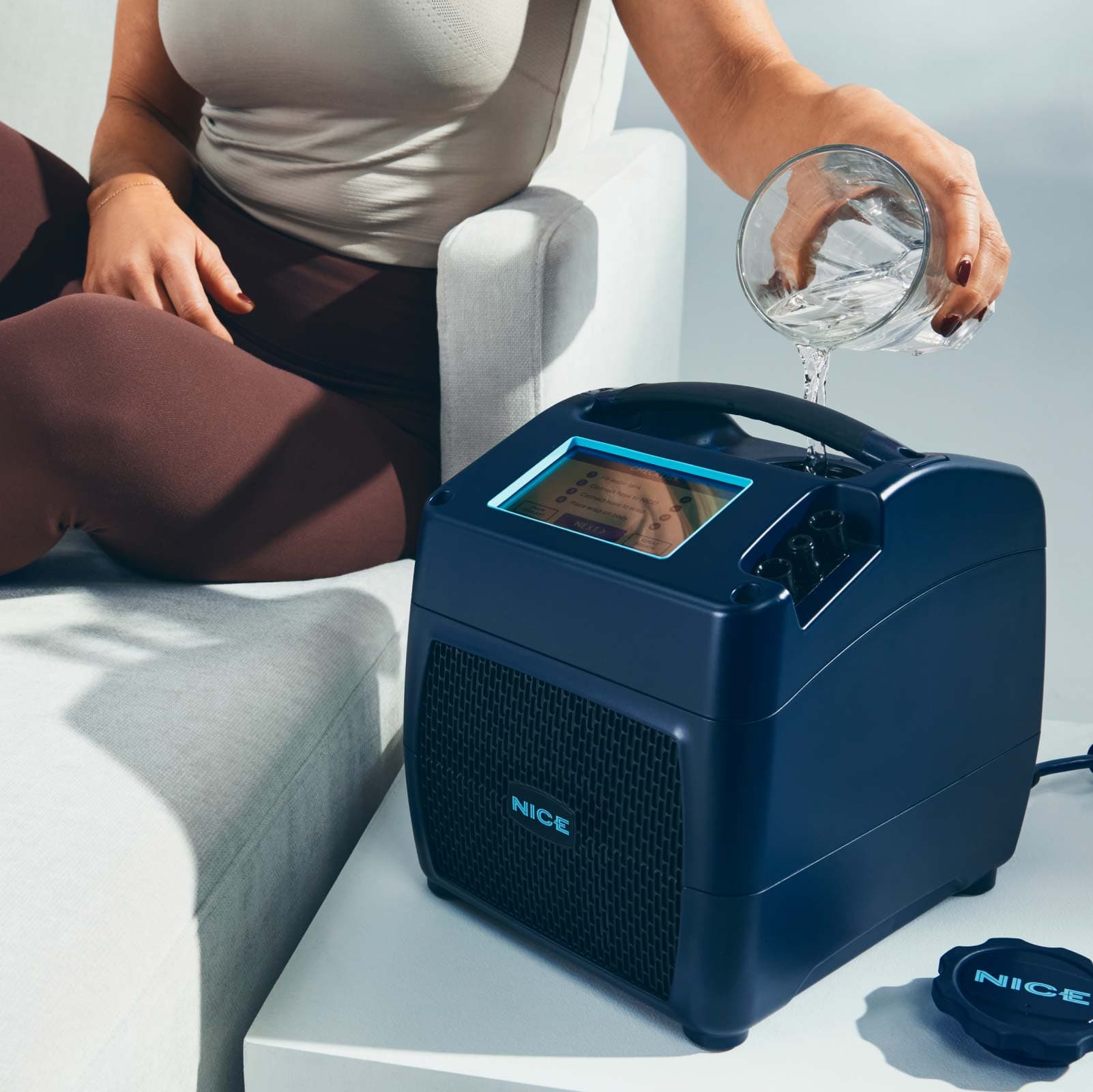
This is where medically engineered systems like the NICE1 Cold Therapy and Compression System stand out. Instead of chasing ultra-low temperatures, NICE1 is designed to deliver precise and consistent cooling — so you get therapeutic effects without risks like tissue injury or numbness.
Here's how NICE1 supports smarter recovery:
- Controlled Temperature— NICE1 maintains temperatures within a safe, effective range (typically 5.5°C to 14.4°C) so you're always in a therapeutic zone, not an extreme one.
- Adjustable to Your Needs— Every person's recovery journey is different — and what feels “right” on day 1 isn't the same as week 3 or 8. NICE1 allows you to customise cold intensity and session length pain-by-pain, day-by-day, and even hour-by-hour.
- Combine Cold With Compression — Compression helps move fluid away from the injury site and supports lymphatic drainage, reducing swelling more effectively than cold alone.
- No Ice Required — Unlike ice packs that melt and fluctuate in temperature, NICE1 delivers consistent therapeutic cooling without the hassle or mess of ice.
Final Thought: Cold Therapy That Fits Your Recovery
At Recovery Kit, we've seen how customisable cold therapy transforms recovery journeys. With adjustable settings, precision temperature control, and care that adapts to how you feel — NICE1 empowers you to manage your healing like a pro athlete manages training: intelligently, safely, and with confidence.
Whether you're just days post-surgery or many weeks into rehab, understanding how to listen to your body and knowing how best to treat it with cold and compression therapy is the key to better recovery.
Ready to recover?
Further Reading