
Waiting for a Knee Replacement? How to Manage Pain and Stay Strong on the Waiting List
Published · by Recovery Kit Team
Being told you need a knee replacement and then being told to wait is a hard combination. The good news is that the months before surgery are not dead time: what you do now affects how you feel while you wait, and how quickly you get going again afterwards.
The knee that sent you to the surgeon in the first place doesn't stop hurting just because you have a date, or the promise of one. This guide covers the things that make the biggest difference: staying strong, managing pain sensibly, supporting the knee day to day, and knowing when to go back to your GP.
You are not the only one waiting
Trauma and orthopaedics, the specialty that carries out joint replacements, has one of the longest waiting lists in the NHS. In August 2025 it stood at 866,426 people in England, and only 58.8% were being treated within the 18-week target (UK Parliament written answer, October 2025). Waits vary a great deal from one hospital to the next, so it is worth asking your hospital for its current estimate rather than going by national figures.
Keep the muscles around the knee working
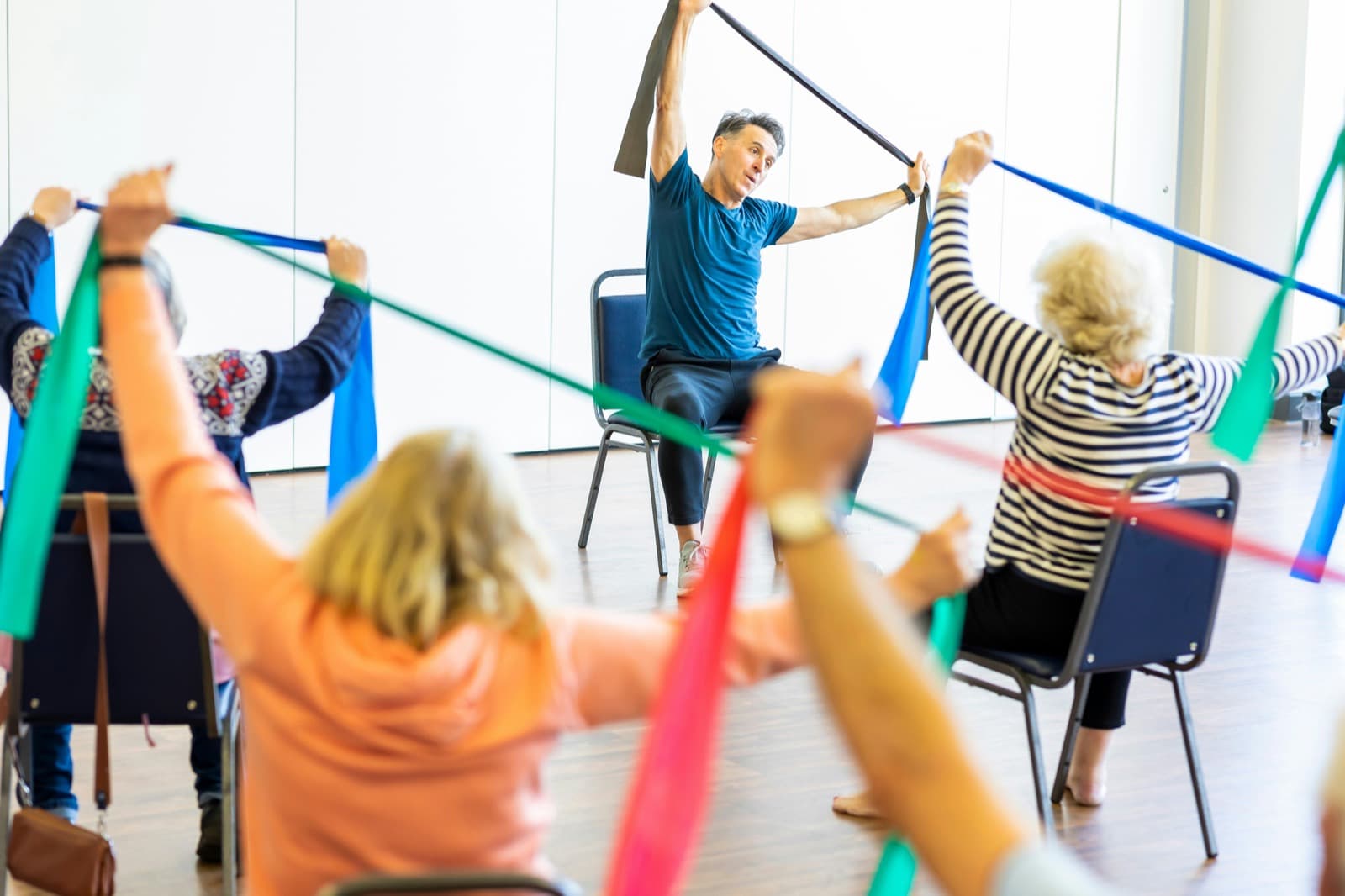
When a knee hurts, the natural reaction is to use it less. Over months, that lets the thigh muscles weaken, and weak thigh muscles make the knee feel less stable and more painful. It also means you start your post-surgical rehab from a lower base.
NICE, which sets the guidance the NHS follows, recommends therapeutic exercise for everyone with osteoarthritis, tailored to the person, such as local muscle strengthening and general aerobic fitness. It also advises that joint pain may increase when you first start, which is normal and usually settles as you get stronger (NICE NG226).
Good starting points, if your physio or GP agrees they suit you:
- Sit-to-stands from a firm chair, using your arms as little as you can
- Straight leg raises lying on your back, keeping the knee locked straight
- Static quad sets: press the back of the knee into the bed and hold for five seconds
- Step-ups onto the bottom stair, holding the banister
- Low-impact cardio: walking on flat ground, an exercise bike, or swimming and aqua aerobics
Little and often works better than one big session. A useful rule of thumb is that some discomfort during exercise is fine, as long as it has settled back to your usual level by the next morning. If it hasn't, do a little less next time rather than stopping altogether.
Take a sensible approach to pain relief
Many people reach for paracetamol first, but NICE now advises that there is no strong evidence it helps osteoarthritis pain and that it should not be offered routinely on its own. For knee osteoarthritis, the first-line medicine NICE recommends is a topical anti-inflammatory gel, such as ibuprofen or diclofenac gel, used alongside exercise. If gels don't work or aren't suitable, your GP may consider oral anti-inflammatories (NICE NG226).
Always check with a pharmacist or your GP before starting or changing medication, especially if you take blood thinners, have stomach, kidney or heart problems, or are on several medicines already.
Away from medication, a few simple things help many people:
- Pacing: break jobs like gardening or shopping into shorter blocks with rests in between
- Heat before activity to ease stiffness, and cold afterwards if the knee is swollen or warm
- Sleep: a pillow between the knees if you sleep on your side, or under the calves (never directly under the knee) if you sleep on your back
Support the knee through the day
NICE suggests considering walking aids for people with knee or hip osteoarthritis. A pair of walking poles takes some load off a painful knee and can make longer walks possible again, which in turn helps you stay fit for surgery. Walking poles also help keep the rest of your body properly aligned, and stop you heavily favouring one side.
Many of our customers also wear a knee support for day-to-day activities while they wait.
The Bauerfeind GenuTrain applies targeted pressure and gentle massage around the knee as you move, stimulating the Hoffa fat pad and improving control of the knee's stabilising muscles to relieve pain and instability.
Incrediwear uses fabric infused with semiconductor elements that are activated by body heat to support local circulation and reduce inflammation. Because it works without tight compression, it is comfortable enough to wear all day or overnight, and it doesn't restrict movement when you are doing your exercises.
Look at the bigger picture
If you are carrying any extra weight, losing even a small amount reduces the load going through your knee with every step. NICE lists weight management alongside exercise as a core treatment for osteoarthritis, and you can book an appointment with your GP to discuss the support available to you.
It is also worth asking your GP or physio about ESCAPE-pain, a free or low-cost programme for people with knee and hip pain that combines education with a group exercise class, usually twice a week for six weeks. It is run in physio departments and leisure centres across the UK, and there is a free app if you can't get to a class (ESCAPE-pain for hip or knee pain).
Start planning for afterwards
The last few weeks before surgery are a good time to prepare your home, sort out help from family and friends, and organise anything you will need for recovery so it is ready when you come home. You can find more on prehab and recovery in our guide to knee replacement recovery and the rest of our blog.
Knee supports and walking poles to help you stay active while you wait.
This article is general information and is not a substitute for advice from your own GP, surgeon or physiotherapist.