
Carbohydrates and Recovery: Why Carbs Matter After Surgery and Injury
Published · by Recovery Kit Team
Carbohydrates are your body's main source of fuel, and that doesn't change when you're recovering from surgery or injury. Here's why they matter for recovery and rehab, and where they fit in before and after an operation.
Carbohydrates have had a bad press over the past few years. With so many low-carb diets around, it's no surprise that a lot of people now see bread, pasta and potatoes as foods to cut back on, especially when they aren't as active as usual.
This kind of thinking often kicks in after a joint replacement, an ACL reconstruction or a sports injury. You might not feel very hungry, you're spending more time sitting down, and eating less seems to make sense. But your body is doing a lot of work behind the scenes to heal, and it needs enough fuel to do that properly.
What carbohydrates do
Carbohydrates are the body's main source of energy. Once digested, they're either used straight away or stored in your muscles and liver as glycogen, ready for when you need them. Your brain runs largely on carbohydrates too.
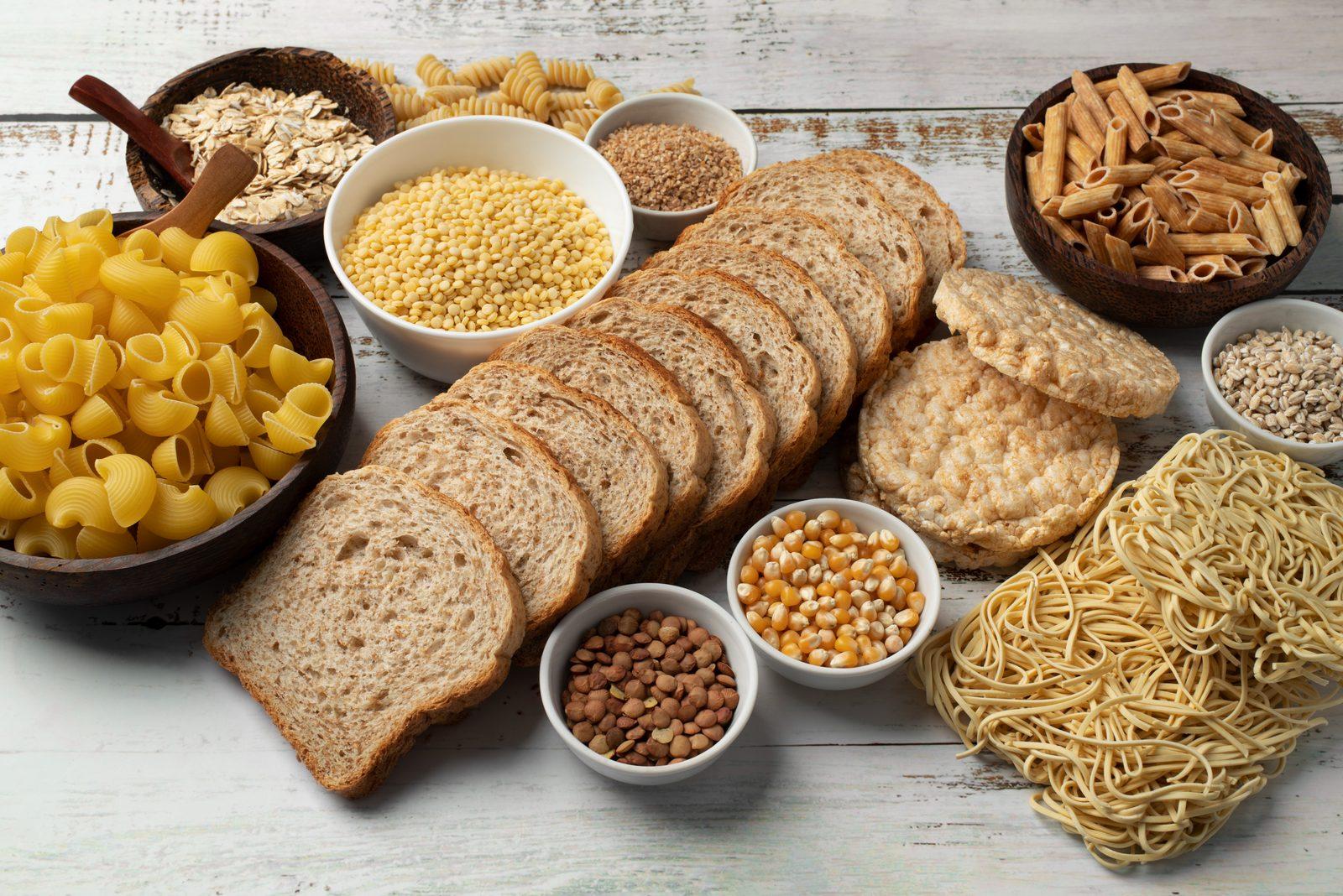
The NHS recommends that starchy foods such as bread, rice, potatoes and pasta make up just over a third of everything you eat, and suggests choosing wholegrain or higher-fibre versions where you can.1 That advice still applies while you're recovering from surgery or injury.
Your body needs fuel to heal
It's natural to think that if you're resting more, you need less food. In fact, the healing process itself uses extra energy, and getting around on crutches uses much more energy than walking.2
If you don't eat enough during this time, your muscles pay the price. Even a moderate shortfall in energy can reduce your body's ability to build and repair muscle tissue.2 This matters most early on in your recovery, as muscle is lost fastest in the first one to two weeks after a limb becomes immobile.3
That doesn't mean eating far more than usual. Taking in a lot more energy than you need while you're less active can actually make muscle loss worse.2 A balanced plate with carbohydrates, protein and vegetables at each meal is a good place to start.
Fuel for your rehab
Your rehab sessions count as exercise, even if they don't feel like a workout. Whether it's the exercises programmed by your physio, your first steps with walking poles, or a gentle spin on an exercise bike, your muscles need energy to do the work, and carbohydrates are one of their main sources of fuel.4
If you find yourself flagging halfway through your exercises, it's worth looking at what you ate beforehand. Having a meal or snack with some carbohydrates in it a couple of hours before, such as porridge with banana or honey on toast, gives your muscles something to work with and makes it easier to get through the session.
Fibre: the carbohydrate that helps after surgery
Constipation is very common after an operation, even if people don't like to talk about it. Strong painkillers, moving around less and eating and drinking less than usual can all slow things down.5
Fibre is a type of carbohydrate, and eating more of it is one of the simplest ways to help. The Royal National Orthopaedic Hospital recommends plenty of fibre-rich foods, such as fruit, vegetables and wholegrain bread and cereals, along with six to eight cups of fluid a day.5 Adults are advised to aim for 30 g of fibre a day, but most people in the UK only manage around 20 g.6
Carb-loading before surgery
Carbohydrates can also play a part on the day of your operation. Many hospitals no longer ask patients to fast from midnight. For hip and knee replacements, the guidance is that you can usually have clear fluids up to two hours before your anaesthetic, and stop eating six hours beforehand.7 Some hospitals also give patients a carbohydrate drink a few hours before surgery.8
Fuel is one part of recovery
Eating well gives your body what it needs to heal, but it works best alongside everything else you are doing. Controlling swelling with cold and compression from the NICE1, getting the thigh muscle working again with a Compexand keeping up with your physio's exercises will all help you make the most of the fuel you're putting in.
This article is for information only and isn't medical advice. If you have diabetes or another medical condition, speak to your GP or a dietitian before changing what you eat. Before surgery, always follow your hospital's instructions.
Sources
The small numbers in the article link to these sources.
- NHS — Eating a balanced diet. nhs.uk/live-well/eat-well/how-to-eat-a-balanced-diet/eating-a-balanced-diet/
- Tipton KD (Mysportscience) — How important is energy intake for recovery from injury? Mysportscience, 2020. mysportscience.com/post/energy-intake-and-injury
- Wall BT, Morton JP, van Loon LJ — Strategies to maintain skeletal muscle mass in the injured athlete: nutritional considerations and exercise mimetics. European Journal of Sport Science, 2015;15(1):53–62. doi.org/10.1080/17461391.2014.936326
- Thomas DT, Erdman KA, Burke LM (American College of Sports Medicine) — American College of Sports Medicine Joint Position Statement: Nutrition and athletic performance. Medicine & Science in Sports & Exercise, 2016;48(3):543–568. doi.org/10.1249/MSS.0000000000000852
- Royal National Orthopaedic Hospital — A patient's guide to management of constipation following surgery. rnoh.nhs.uk/patients-and-visitors/patient-information-guides/management-constipation-following-surgery
- NHS — How to get more fibre into your diet. nhs.uk/live-well/eat-well/digestive-health/how-to-get-more-fibre-into-your-diet/
- Wainwright TW et al. (ERAS Society) — Consensus statement for perioperative care in total hip replacement and total knee replacement surgery: Enhanced Recovery After Surgery (ERAS) Society recommendations. Acta Orthopaedica, 2020;91(1):3–19. doi.org/10.1080/17453674.2019.1683790
- Smith MD et al. (Cochrane review) — Preoperative carbohydrate treatment for enhancing recovery after elective surgery. Cochrane Database of Systematic Reviews, 2014;(8):CD009161. doi.org/10.1002/14651858.CD009161.pub2